Most people prep for France the same way.
They watch a few TikToks about “Paris mistakes,” save twenty restaurant pins they’ll never visit, and memorize exactly three French phrases (none of which they’ll pronounce correctly under pressure). Then they land, realize everything feels faster and more real than the internet, and spend the first two days overwhelmed and slightly lost.
Here’s a smarter move that almost nobody does, and it’s ridiculously effective:
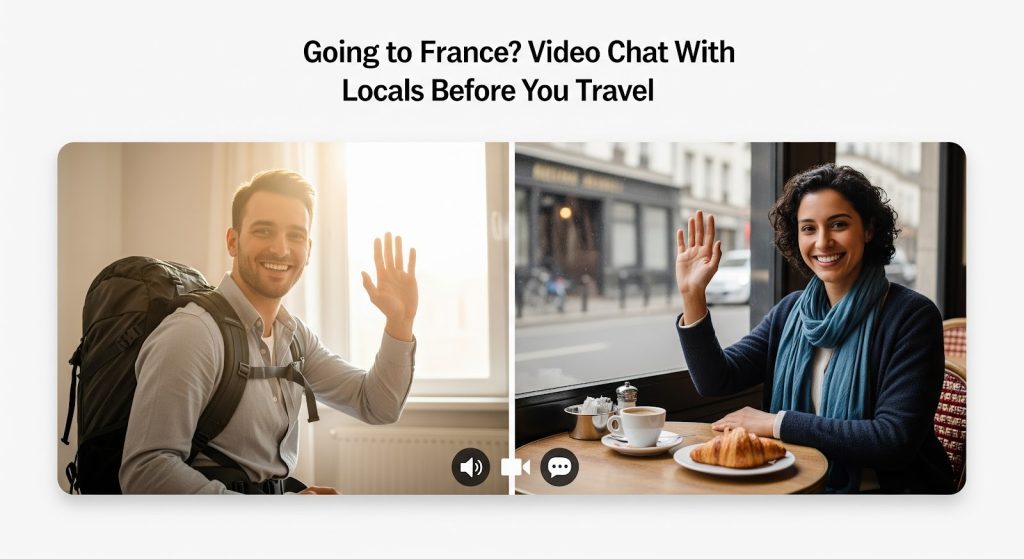
Video chat with locals before you travel.
Not in a “plan my itinerary for me” way. In a “get your brain used to the vibe” way. You’re basically giving yourself a social and cultural warm-up so your first real interactions in France don’t feel like a pop quiz.
This post is a practical, energetic guide to doing exactly that. You’ll learn what to ask, how to keep it natural, how to avoid awkwardness, and how to turn a few short calls into real travel advantages.
Why this works (and why it’s better than more research)
Travel research is passive. Video chatting is active.
When you chat with locals, you practice the exact skills you’ll need on the ground:
Understanding real speech and accents
Asking questions quickly and politely
Reacting in the moment
Getting comfortable with French pacing and tone
Learning what people actually do, not what blogs copy from each other
It also reduces anxiety. The first time you order food or ask for directions won’t feel like your first time. Your brain will already have “France conversations” in its memory.
And there’s a bonus: locals don’t just give recommendations. They give context. They tell you what’s overrated, what’s seasonal, what’s a tourist trap, and what they’d do if they had one free afternoon.
That’s hard to get from a listicle.
The mindset that makes locals want to talk to you
If you go into a call like “Teach me France,” you’ll sound like homework. People don’t want to be homework.
If you go in like “I’m curious and I want real-life tips,” you’ll sound fun.
The best frame is simple:
I’m traveling soon, and I want to experience France like a normal person. Can I ask you a few quick questions?
That feels respectful. It also gives them an easy role: friendly guide, not unpaid tour agent.
Where to meet locals
You can meet French locals on language exchange apps, travel communities, city-specific groups, gaming servers, and general video chat platforms. Some travelers also use spontaneous chat sites like freecams when they want quick, low-commitment conversations and don’t feel like building a profile first.
The platform matters less than your approach. If you show up with a relaxed vibe and a few good questions, you’ll get better conversations anywhere.
The “15-minute pre-trip chat” structure
Here’s a structure that makes your calls productive without turning them into interviews.
Minute 1: quick intro and your travel context
Minutes 2–10: one main topic (food, neighborhoods, transit, etiquette)
Minutes 11–13: rapid-fire recommendations
Minutes 14–15: recap and one last “local tip”
You’re not trying to cover all of France in one call. You’re trying to collect small pieces of reality.
Minute 1: intro that doesn’t feel awkward
Try something like:
Hey! I’m visiting France soon and I’m trying to learn the real-life basics before I go. Where in France are you?
If they answer, you can add:
Nice. I’m going to be in [city/region] for a few days. I’m trying to avoid tourist mistakes and do things the normal way.
That’s it. Short, friendly, clear.
What to ask locals (the questions that actually help)
Most people ask boring travel questions. “What should I see?” “Best restaurants?” That can work, but you’ll get generic answers.
Ask better questions and you’ll get better answers.
1) The “what do locals do” question
If you had a free Saturday in your city, what would you actually do?
This forces the conversation into real habits, not Google results.
2) The “what’s overrated” question
What do tourists obsess over that locals don’t really care about?
This is one of the best questions you can ask anywhere in the world.
3) The “timing” question
What time do people usually eat dinner where you are?
What time does the city feel most alive?
France is very timing-based. Knowing rhythms makes your trip smoother.
4) The “simple food” question
If I want a good, normal meal without getting scammed, what should I order?
This usually leads to practical tips like how to spot tourist menus, what to avoid around certain areas, and what’s a good deal.
5) The “small etiquette” question
What’s one polite thing foreigners forget in France?
This is huge. Even a small cultural habit can change how people respond to you.
A classic example is greeting. In many situations, a simple “Bonjour” before you ask something can completely change the vibe.
6) The “transport reality” question
What’s the easiest way to get around day to day?
Anything tourists mess up with tickets or transit?
Locals will often tell you the one annoying rule that no travel guide explains clearly.
7) The “neighborhood” question
If I stay in [area], what’s it like at night?
Where would you stay if you were me?
This can be genuinely useful for safety and comfort, but keep it general. Don’t ask for anything too personal.
How to keep the conversation from feeling like an interrogation
Here’s the trick: after every question, react like a human.
That’s so interesting, I didn’t know that
Okay wait, why is it like that
That sounds perfect, I love that vibe
No way, I would’ve messed that up
Then share a tiny bit about yourself:
In my country we usually do it differently
I’m the kind of traveler who likes walking more than museums
I’m coming mostly for food and atmosphere
Small shares create balance. Balance creates comfort. Comfort creates better info and better connection.
How to practice French without embarrassing yourself
If you’re learning French, video chat is a cheat code, if you do it wisely.
Don’t try to speak perfect French for 15 minutes. It’ll stress you out. Instead, use the “French sandwich” approach:
Start in French
Switch to English if needed
End in French
Even if your French is basic, these lines go a long way:
Salut, je vais voyager en France bientôt
Hi, I’m going to travel to France soon
Je parle un peu français, mais je fais des erreurs
I speak a little French, but I make mistakes
Tu peux parler un peu plus lentement?
Can you speak a bit slower?
Comment on dit ___?
How do you say ___?
French locals are often more supportive when you’re clearly trying and not pretending to be fluent.
The two things that will instantly make your trip easier
After a few chats with locals, you’ll usually gain two superpowers.
1) You’ll understand “France pacing”
France often has a different conversational rhythm. Sometimes more direct. Sometimes less bubbly. Sometimes more opinionated. People may not do constant friendly filler words the way Americans do, for example.
Once you’ve chatted a few times, it won’t feel “cold.” It will feel normal.
2) You’ll learn the small rules that matter
Not the huge stuff. The tiny stuff.
How to order politely
When shops close
What’s considered rude or weird
How to not stand out as the easiest tourist target
How to blend just enough to have a calmer experience
Those tiny rules are worth more than ten influencer itineraries.
A pre-trip routine you can actually follow
If you’re traveling in the next month, try this:
Week 1: two short chats, focus on etiquette and daily life
Week 2: two chats, focus on food and neighborhoods
Week 3: two chats, focus on transport and “what’s overrated”
Week 4: one chat, focus on your specific itinerary and last questions
Each chat can be 10–20 minutes. That’s enough.
You don’t need to become an expert. You just want your first day in France to feel familiar, not shocking.
Safety and boundaries
Quick reminder because it matters:
Don’t share private details too fast
Keep your location info general
If someone is weird, leave immediately
Use platforms with reporting tools
Trust your instincts
Most people you meet will be normal. But you should still travel-smart and internet-smart.
What to do with the recommendations you get
Don’t just collect them like souvenirs. Turn them into a simple travel cheat sheet:
Three places locals mentioned more than once
Three things locals said were overrated
Three etiquette tips you want to remember
Three phrases you want to practice
One food you must try
One neighborhood you should walk around
That list will be more useful than a hundred saved pins.
Final thought: the best travel prep is social prep
France isn’t just places. It’s people. It’s tone. It’s rhythm. It’s how conversations start and how they flow.
If you show up having already talked to a few locals, you’ll arrive with something most tourists don’t have: comfort.
And comfort turns travel into enjoyment.
So yes, watch the videos. Save the restaurants. But also do the one thing that makes your trip feel real before you even pack your bag.
Talk to the people who live there.